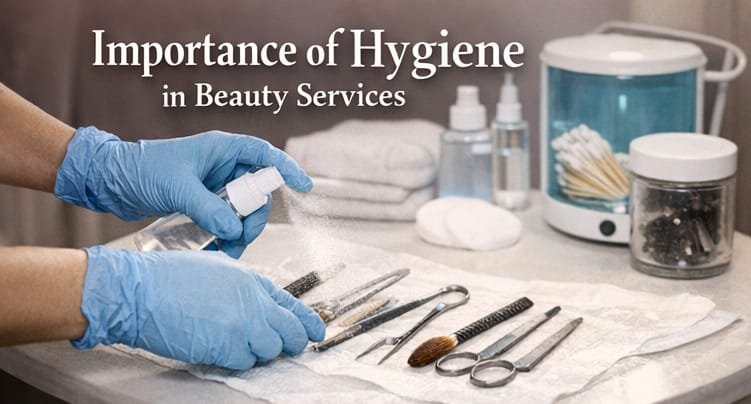
In the beauty and wellness industry, hygiene is not just a professional requirement—it is a responsibility. Beauty services involve close physical contact, the use of sharp tools, and direct exposure to skin, hair, and nails. Maintaining high standards of hygiene protects both clients and beauty professionals, builds trust, and ensures the long-term success of any beauty business.
Protects Client Health and Safety
Proper hygiene helps prevent the spread of infections, skin diseases, and allergies. Unclean tools, contaminated products, or poor hand hygiene can easily transmit bacteria, fungi, and viruses. Conditions such as fungal nail infections, acne breakouts, and scalp disorders often arise from unhygienic practices. By sanitizing tools, washing hands regularly, and using clean linens, beauty professionals create a safe environment for every client.
Maintains Professional Standards
Hygiene reflects the professionalism of a beauty service provider. Clean workstations, neatly arranged tools, and fresh towels show that the beautician values quality and client care. Professional hygiene standards are often regulated by health authorities, and following these guidelines helps salons avoid legal issues and maintain their licenses.
Builds Client Trust and Confidence
Clients are more likely to return to a salon where they feel safe and comfortable. Visible hygiene practices—such as disinfecting tools in front of clients, using disposable applicators, and wearing gloves when necessary—build confidence. Trust plays a major role in customer loyalty, and good hygiene is one of the strongest ways to earn it.
Protects the Beauty Professional
Hygiene is equally important for beauty professionals themselves. Regular exposure to chemicals, skin contact, and sharp instruments increases the risk of occupational infections. Using personal protective equipment, maintaining personal cleanliness, and safely disposing of waste reduces health risks and ensures a safer working environment.
Enhances Service Quality and Results
Clean tools and products deliver better results. For example, sanitized makeup brushes provide smoother application, clean facial equipment improves skin treatment effectiveness, and hygienic nail tools prevent damage and infections. Hygiene directly impacts the quality and outcome of beauty treatments.
Promotes a Positive Salon Image
A hygienic salon attracts more clients through positive reviews and word-of-mouth recommendations. In contrast, poor hygiene can damage a salon’s reputation quickly. A clean and well-maintained space leaves a lasting impression and sets the salon apart from competitors.
Conclusion
Hygiene in beauty services is essential for health, safety, professionalism, and business success. It protects clients and professionals, improves service quality, and builds trust. By maintaining strict hygiene standards, beauty service providers not only enhance their reputation but also contribute to a safer and more responsible beauty industry.